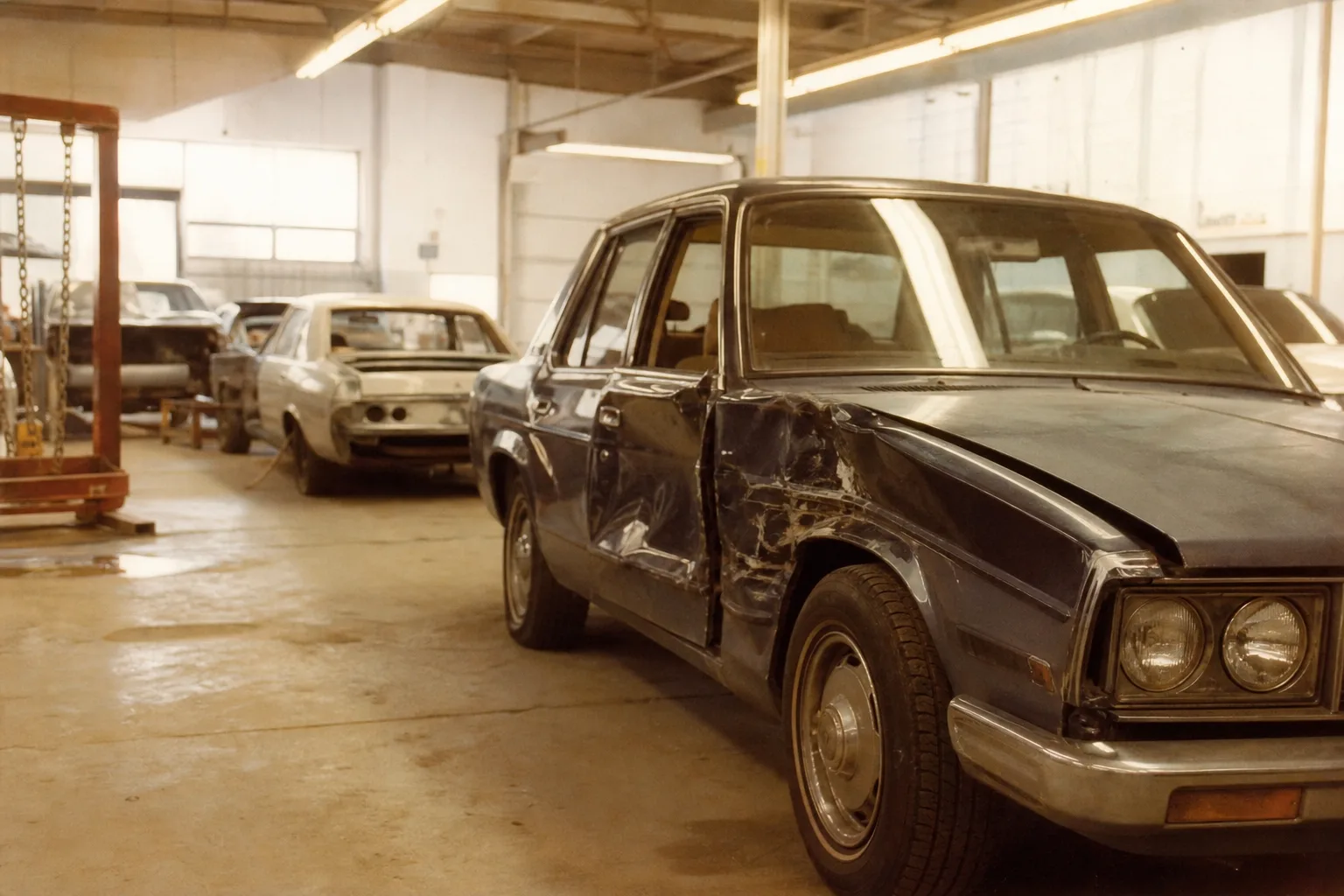
How to tell a claim you can settle directly with an adjuster from one that needs representation, and what California small claims court will and will not hear.
Most collisions do not produce a lawsuit, and a good share of them do not produce an attorney either. A bumper, a tail light, three weeks of a stiff neck, and a driver who admitted at the scene that he was looking at his phone: that file settles in six to ten weeks with a few phone calls and a folder of paper. The useful skill is not negotiation. It is recognizing, early and honestly, which of those facts is doing the work, and noticing the moment one of them stops being true.
Property damage only, and the four numbers to check
When nobody is hurt, the claim is arithmetic and you can do the arithmetic. Check the repair estimate against a second one from a shop you chose rather than one steered to you, because the difference between the two is the negotiating range. Check whether the insurer is calling the car a total loss, and if so, check the actual cash value they assigned it against listings for the same year, mileage, and trim within a reasonable radius. Check that rental coverage runs through the full repair period, not a fixed number of days. Check whether your own collision deductible comes back to you when your insurer recovers from the other side.
Diminished value is the fourth number and the one most people miss. A repaired car with an accident on its history report sells for less than one without, and in California that loss is recoverable from the at-fault driver's insurer in the right circumstances. It requires an appraisal, not an assertion. A careful reader asks for the insurer's written basis for denying it rather than accepting the first no, and keeps every estimate, photograph, and repair invoice in one place, because the entire property damage claim is built out of documents you already have.
Soft tissue injury when liability is not in question
The self-handled injury claim has a narrow profile: a police report or a recorded admission that puts fault clearly on the other driver, treatment that resolves within a few months, no fractures, no imaging that shows anything structural, and no gaps in the medical record that an adjuster can point to. The National Highway Traffic Safety Administration oversees vehicle safety standards and collects national crash data, and the ordinary rear-end impact it catalogs is exactly this kind of file. You assemble the bills, the records, the wage loss verified by an employer letter, and you write a demand that states the total and asks for a figure above it.
What a careful reader checks before sending that demand is who else has a claim on the money. Health insurance that paid for treatment usually has a right of reimbursement, and Medi-Cal and Medicare both do. A settlement that looks generous can shrink to very little after those liens are satisfied, so the reimbursement amount should be known, in writing, before you sign a release. The release is final. There is no reopening it because the neck came back six months later.
The two facts that change everything
The first is a disputed fault finding. Once an adjuster assigns you a percentage, California's pure comparative negligence rule means your recovery drops by that percentage, and the argument over whether it is fifteen or forty is worth more than most of the medical bills. The second is a surgery recommendation, or an injection series, or an orthopedist writing the words permanent and stationary with a restriction attached. Either one moves the claim into a range where policy limits, future care costs, and a life care projection start to matter, and the difference between a represented and an unrepresented outcome stops being a contingency fee and starts being the whole case.
What California small claims court will and will not do
Small claims is available for money damages, and for an individual the ceiling is currently $12,500, with a lower cap for corporations and other business entities. Attorneys cannot represent either side at the hearing, which is the point: it is built for people arguing their own facts. Filing fees are modest and scale with the amount claimed, and there is a limit on how many larger claims one person can file in a year. Personal injury actions carry a two-year deadline from the collision, property damage three, and small claims does not extend either. A defendant who loses can appeal for a new trial in superior court; a plaintiff who loses cannot.
Two practical limits are worth knowing before you file. The court awards money and will not order an insurer to do anything, and you sue the driver, not the carrier, though the carrier ordinarily pays a judgment within its policy limits. Verify the current dollar figures and filing rules against the court's own self-help materials, since the limits are adjusted by statute from time to time.
The line, then, is not really about the size of the damage to the car. It is about whether every material fact in the file is one you can prove with paper you already hold, and whether the treatment has finished. When both are true, the claim is yours to settle. When either stops being true, the arithmetic has changed, and the sensible next call is to someone who does this for a living.